

Utah Epoxy Coatings · Updated 2026-07-22
You picture summer nights on the Deck, Wasatch views in the background, and friends leaning on the railing while something sizzles on the grill. Then winter hits Salt Lake City, and that same deck takes a beating,sun one week, snow the next, then a freeze-thaw roller coaster. If you’re tired of peeling paint or slippery boards, an Epoxy Floor coating for decks can change the game. It looks sharp, cleans up fast, and stands up to Utah’s moody weather when it’s built the right way. Let me explain what that “right way” actually means,and how homeowners and local businesses can get a long-lasting, great-looking surface without babying it.
So, what exactly is an epoxy deck coating?
Here’s the thing: a true outdoor epoxy deck isn’t just a bucket of epoxy rolled on a Saturday afternoon. Epoxy is a tough, chemical-cured resin that bonds like crazy to concrete and prepared substrates. It creates a seamless, easy-to-clean surface. But sunlight is sneaky. Straight epoxy doesn’t love UV exposure. That’s why a professional deck system in Salt Lake City usually pairs a 100 percent solids epoxy base with a UV-resistant topcoat,often a polyaspartic topcoat or aliphatic urethane. Think of epoxy as the muscle and the topcoat as the sunglasses.
Two more notes. First, epoxy shines on concrete decks, rooftop Patios with proper design, and covered porches. Second, wood decks can work, but they need more steps,sometimes a waterproof membrane or fiberglass-reinforced layer,so the system can move a little without cracking.
Will epoxy hold up outside in Utah? The honest answer
Short answer: yes,with the right build. Epoxy by itself can chalk or amber in strong sun. High elevation means stronger UV here. But when you add a UV-stable topcoat and texture for traction, you get a surface that resists sun, snow, de-icing salts, and spills. It’s built for real life.
There’s a mild contradiction worth clearing up. You’ll hear “epoxy isn’t for outdoors.” It’s true and not true. Raw epoxy isn’t ideal in the sun. A complete outdoor epoxy system is. A contractor may install plenty of them across the Wasatch Front, and they earn their keep,especially on patios and exposed landings that need fast cleanup and fewer slip hazards.
Where epoxy-coated decks shine around Salt Lake City
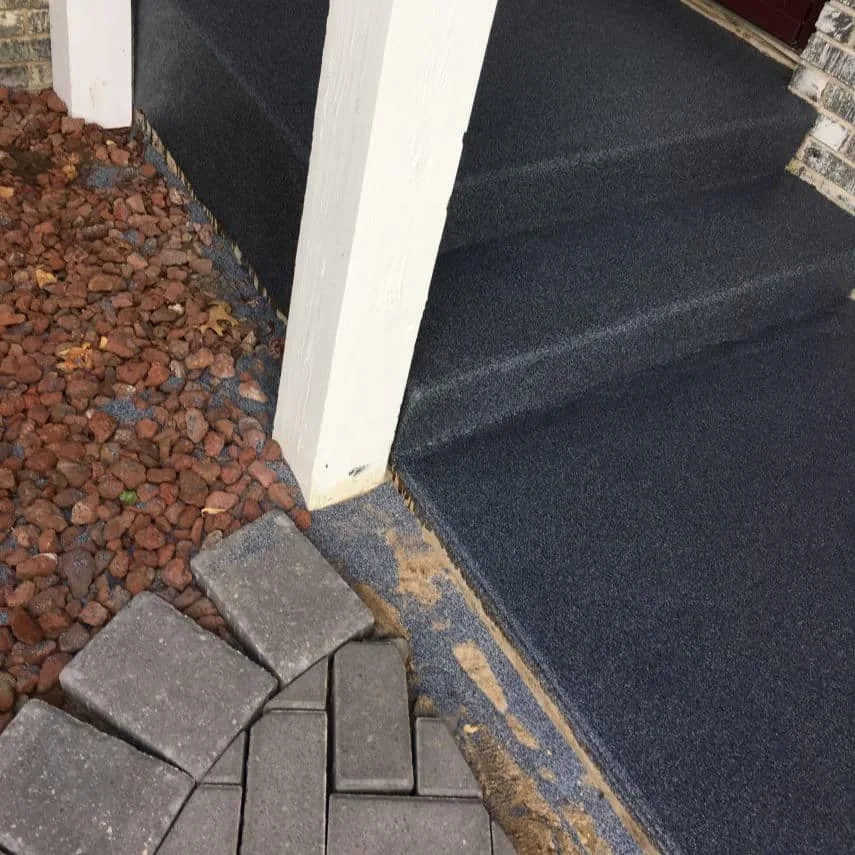
Homes and businesses both see big wins with a waterproof deck coating built around epoxy. Homeowners love it on patios, Pool surrounds, breezeways, and entry porches. It helps with snow shoveling, looks clean, and adds that “finished” feel. Restaurants and breweries use it on patios because it’s non-porous, easy to sanitize, and looks great for years. Urban condos and townhomes use it on rooftop amenity decks with the right waterproofing layers beneath.
And yes, even smaller condo balconies can work. The trick is in the prep and a system that matches how the space actually gets used,heels, chair legs, dogs, snow shovels, you name it.
Good, better, best: smart systems that beat the weather
Every deck needs a different recipe. Here are common builds that hold up well locally.
Swipe to compare →
| Solid #ddd;”>System | When to use | Why it works |
|---|---|---|
| Epoxy base + aliphatic urethane topcoat | Covered porches; partial sun; light commercial patios | Solid color, great adhesion, added UV defense; budget-friendly |
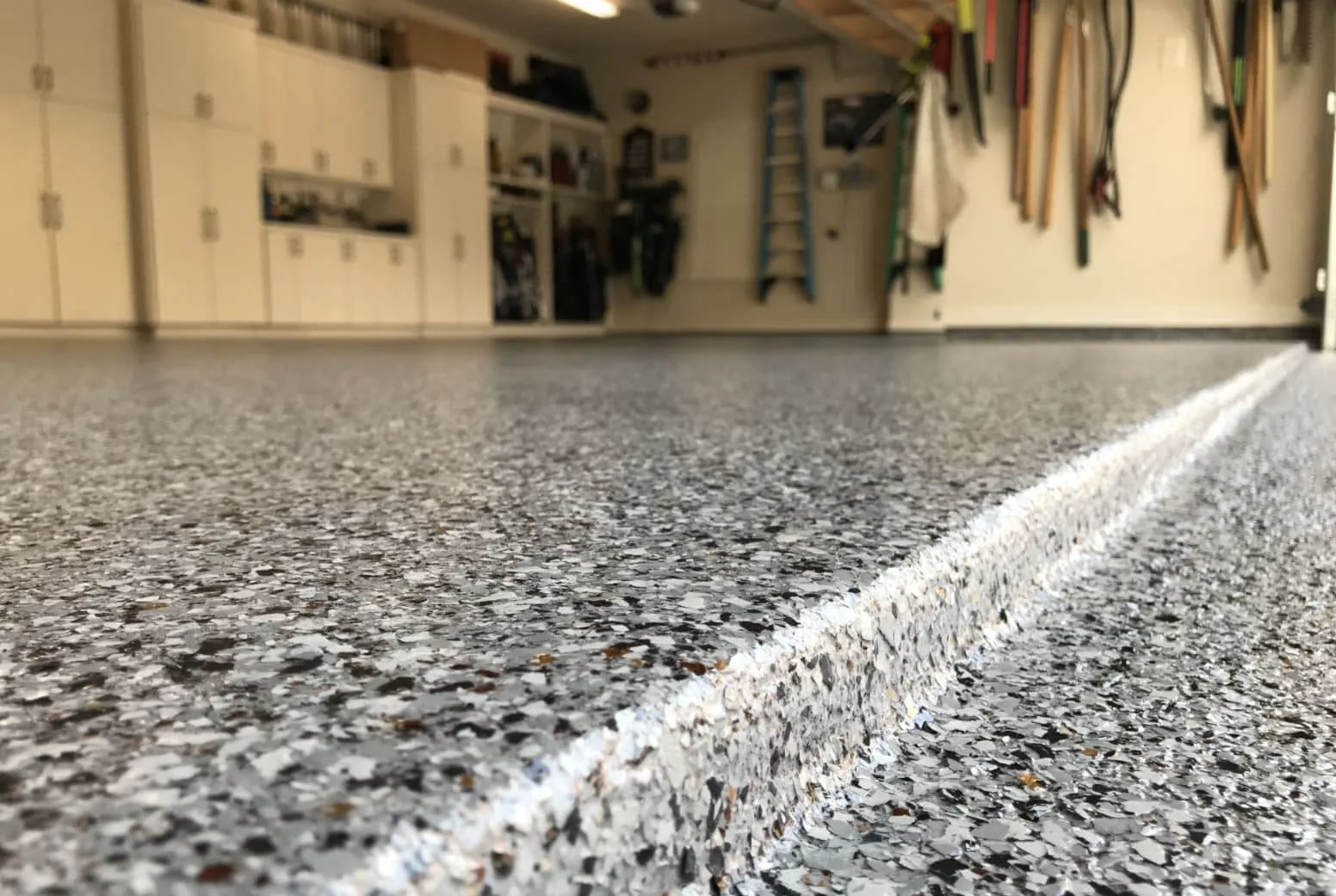
| Moisture-mitigating epoxy + Flake broadcast + polyaspartic topcoat | Exposed patios; freeze-thaw zones; heavy foot traffic | Non-slip texture; hides wear; fast return to service; strong UV resistance |
| Elastomeric waterproof membrane + epoxy sand build + polyaspartic topcoat | Rooftop decks; over living space; demanding commercial use | Waterproofing + structure-friendly flex; durable texture; long service life |
Brands we often reference: Sherwin-Williams General Polymers, Tennant Coatings, Dur-A-Flex, and Sika Flooring for epoxies and urethanes; Neogard, Tremco Vulkem, or Sikalastic for elastomeric membranes on occupied decks. Picking the right chemistry matters as much as color.
Surface types: concrete, wood, and rooftop decks
Concrete decks and patios
Concrete is the best base for Patio epoxy. We mechanically profile it first,diamond grinding or shot blasting with HEPA dust control (think Edco/Husqvarna grinders and Ermator vacs). That opens the pores for strong adhesion. Cracks get routed and filled with epoxy paste or polyurea. If moisture is pushing up through the slab, a contractor may test with ASTM F2170 in-slab RH sensors and apply a moisture-mitigation epoxy as needed.
Wood decks
Wood moves. Epoxy does not. That’s the whole story in one line. You can still build a durable system, but you need an intermediate layer that tolerates movement,often a fiberglass-reinforced detail or an elastomeric urethane membrane under the broadcast layers. Fasteners must be tight. Loose boards get replaced. Edges get sealed. Some older decks benefit from new exterior-grade plywood sheathing to create a cleaner, stiffer surface before coating.
Rooftop or over-living-space decks
These need a true waterproofing membrane with approved details around drains, scuppers, and rails. Once the membrane is down and tested, a contractor may add the build coats for texture and color. That way, the wear layer can be renewed years later without disturbing the waterproof layer beneath. Honestly, this approach saves headaches,and money,long term.
Looks and traction: your finish, your rules
Style matters, but safety does too. We balance both with texture that fits your deck’s use.
- Solid color epoxy/urethane: Clean, modern, and easy to maintain. Add silica or polymer grit for non-slip traction.
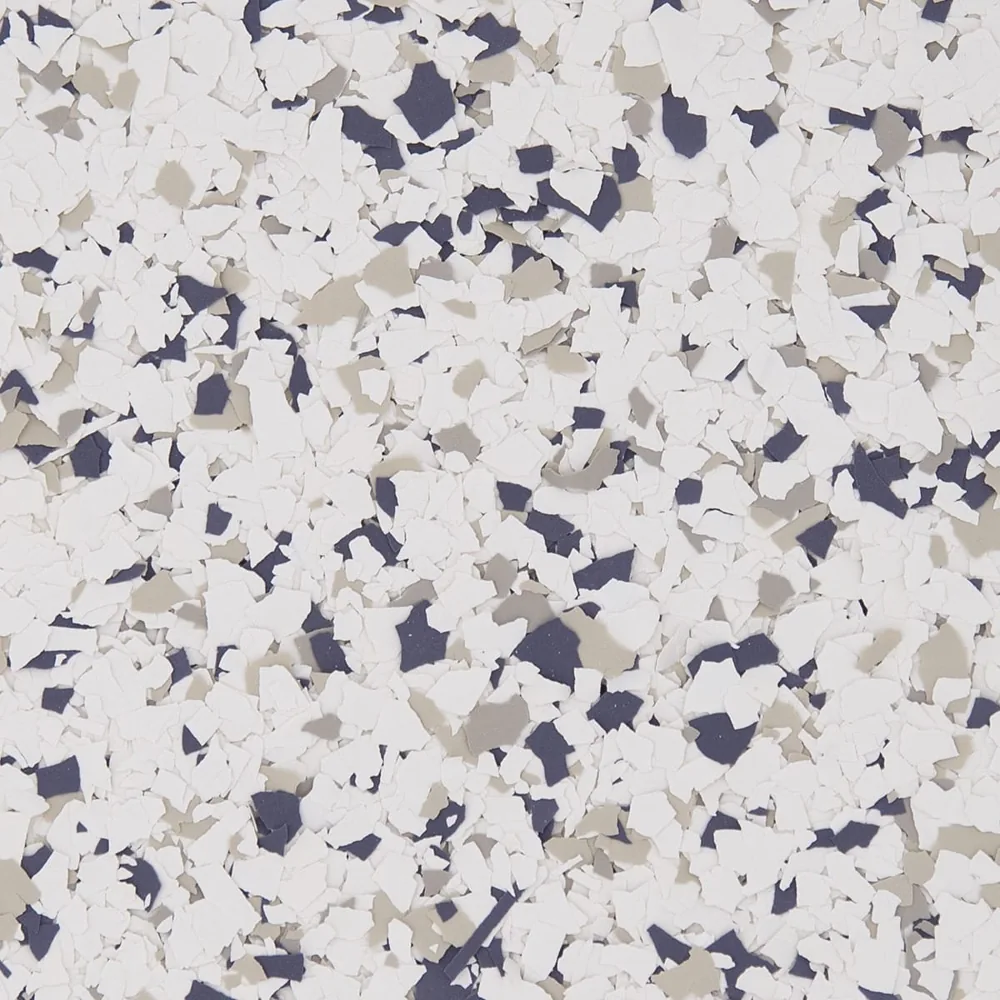
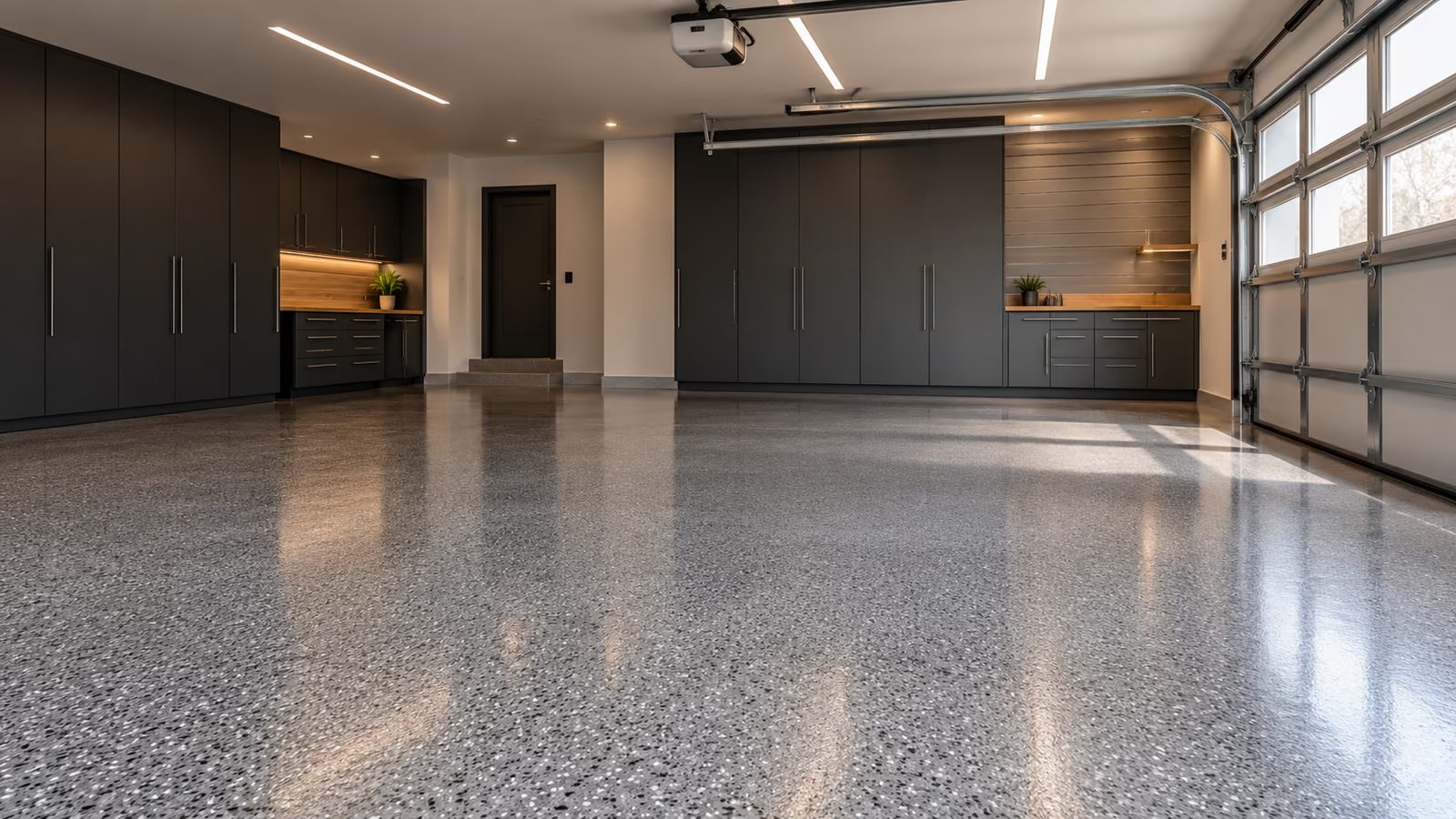
- Color flake broadcast: Popular and forgiving. It hides dust and light wear. Great for busy patios and families with dogs.
- Quartz broadcast: Crisp, uniform, and very durable. Ideal for restaurants and pool decks that want grip and style.
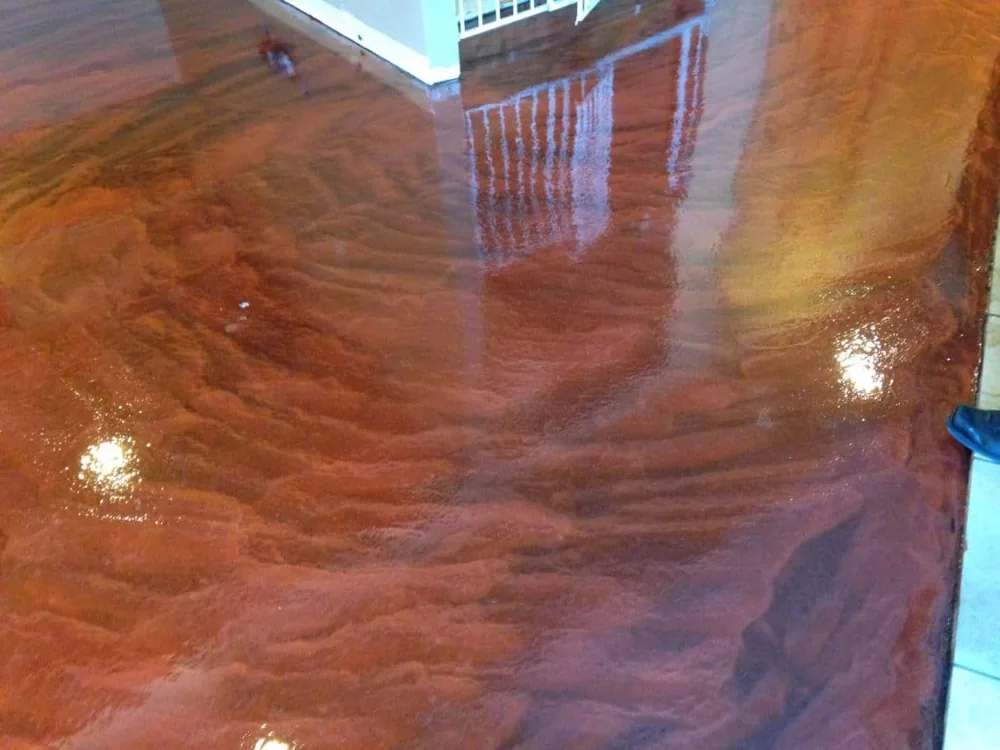
A quick note on Metallic Finishes: gorgeous indoors, not a favorite outdoors. Sun can shift the look over time. If you crave a shimmer, we’ll guide you to UV-stable blends that keep their color.
Weather windows, cure times, and Wasatch quirks
Salt Lake City keeps us on our toes. Spring storms pop up. Fall mornings can be frosty. Temperature and substrate moisture drive our schedule more than the calendar does. Most epoxies like a slab above 50–55°F. Polyaspartics are more flexible with temperature and cure fast, which is handy when a cold front sneaks in.
Typical timeline for a standard patio: Day 1 profile and repairs. Day 2 prime and build coat. Day 3 broadcast and topcoat. Light foot traffic within 12–24 hours after the final coat; full cure in about 3–5 days. Commercial patios sometimes get staged in halves so businesses can keep serving. You know what? Planning makes all the difference.
How much does an epoxy deck coating cost in Salt Lake City?
We keep pricing straightforward, but every deck is different,access, prep, repairs, and system type all factor in. Here are ballpark ranges we see around the valley.
Swipe to compare →
| System | Typical price per sq ft | Notes |
|---|---|---|
| Epoxy + urethane (solid color) | $5–$9 | Best on concrete; covered or partial sun areas |
| Moisture-mitigating epoxy + flake + polyaspartic | $8–$14 | Great all-around outdoor system; fast return to service |
| Waterproof membrane + epoxy build + polyaspartic | $12–$20+ | Over living space; complex details; longest service life |
Maintenance: fast, simple, and snow-friendly
Coated decks are easy to live with. A little routine keeps them sharp.
- Sweep or blow debris weekly. Grit is sandpaper under shoes.
- Rinse and mop with mild detergent every month or two. Skip harsh solvents.
- Use plastic shovels in winter. Metal can gouge.
- Go gentle on de-icing salts. Calcium chloride is kinder than rock salt.
- Felt pads under chair legs. Your future self will thank you.
When the topcoat looks dull in the main walk lanes, we can scuff and recoat. It’s a quick facelift that resets traction and sheen.
DIY or professional install? A quick reality check
We love a good weekend project, but exterior systems leave less room for error. Weather swings, moisture in the slab, and surface prep are where DIY jobs go sideways. You’ll need a grinder with proper diamonds, a HEPA vacuum, moisture testing tools, mixing drills, spike shoes, and a calm hand when the clock is ticking. Miss one step, and you may be peeling a bond-breaker off the slab next spring.
Pros bring the gear, the chemistry, and a rhythm that comes from doing this day in and day out. We also stand behind the work. For restaurants, property managers, and HOAs, that peace of mind matters as much as the final shine.
Common questions we hear in Salt Lake City
Will it get slippery when wet? Not if a contractor may build in texture. Flake and quartz broadcasts plus specialty grits create serious traction without feeling like sandpaper on bare feet.
Can you coat in winter? Sometimes. We watch temperatures closely and use materials that cure in the cold. Tenting and heat help, but safety and performance come first.
What about color fade? That’s why we use UV-resistant topcoats and color-stable blends. We’ll guide you to shades that stay true in our high-altitude sun.
Can you fix low spots and cracks? Yes. We level birdbaths, route and fill cracks, and correct slope whenever possible. Good prep is half the job.
Questions to ask before approving the work · Utah Epoxy Coatings
We’re local. We know what a March thaw does to a patio and how August sun can roast a slab. We use proven systems from brands you can trust, and we’ll tell you straight if your deck needs a different approach,like a full elastomeric waterproofing,before we talk color chips. Related resources: Process
Expect clear bids, tidy job sites, and finishes that make guests ask, “Who did this?” Whether it’s a family patio, a rooftop amenity space, or a busy restaurant courtyard, a contractor may build coatings that look good and stay that way.
Ready to protect your deck and make it look amazing?
If you want a non-slip, low-maintenance, great-looking surface that stands up to our sun-and-snow rhythm, let’s talk. Call us at 801-515-0892 or click Request a Free Quote. We’ll assess your deck, recommend the right system, and give you a clear timeline,no guesswork, no hassle. One call, and your deck starts working harder for you.