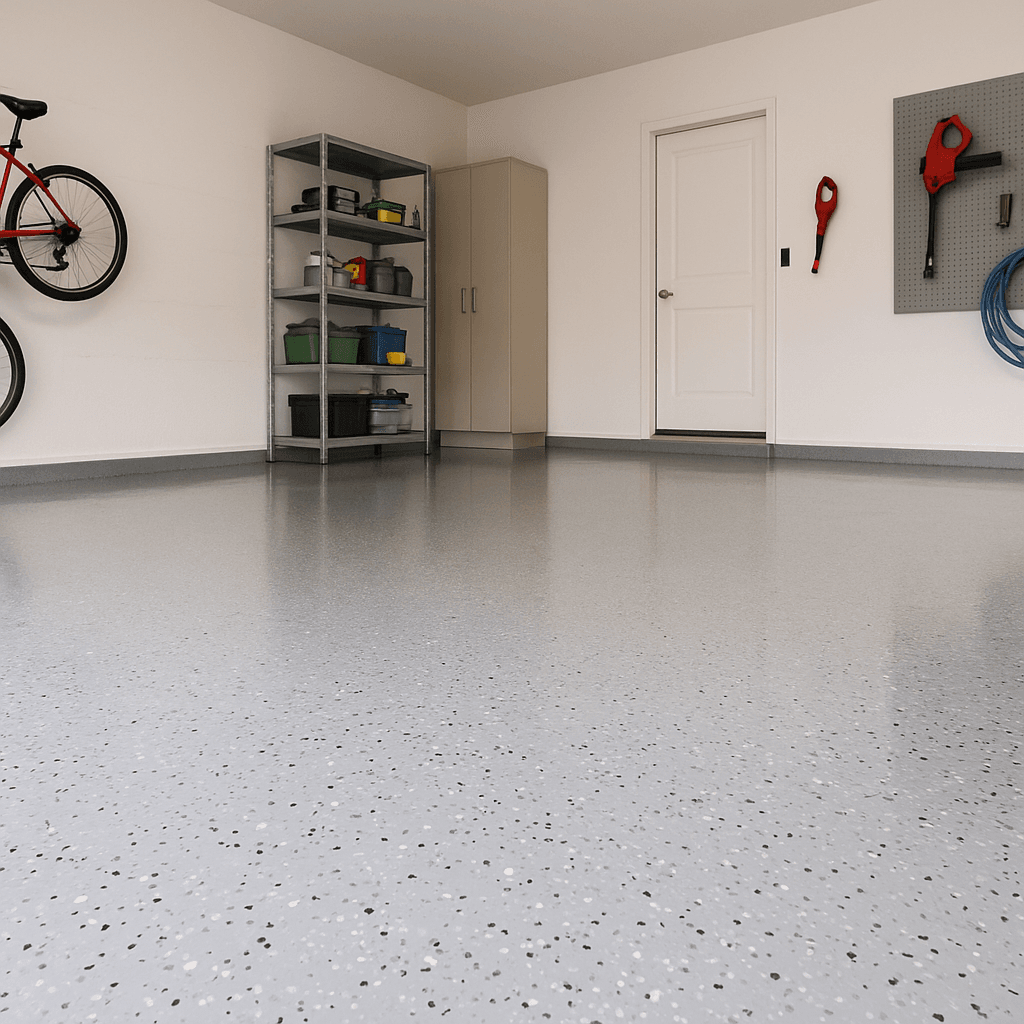
Your Garage has a story. Some days it’s a ski-boot changing room with slush and road salt. Other days it’s a workshop, a bike repair bay, or the place you keep meaning to organize “next weekend.” If you’re in Salt Lake City, you know that winter mess hits hard and summer dust blows in with gusto. Here’s the thing: a professional Epoxy Floor coating can turn that high-traffic, catch-all space into a clean, bright, easy-to-maintain hub that actually makes daily life simpler. And yes, it’ll look fantastic too. Let me explain how it works and what to expect when you transform your garage with Utah Epoxy Coatings.
Contents
- 1 Why epoxy just makes sense in Salt Lake City
- 2 What epoxy floor coating is—without the jargon
- 3 DIY versus hiring a pro: a quick reality check
- 4 Step-by-step: how we transform your garage
- 5 Design choices that feel personal—without feeling fussy
- 6 Durability, maintenance, and safety—short and sweet
- 7 What it costs and how long it takes
- 8 Common myths and easy-to-avoid mistakes
- 9 For shops and small businesses: epoxy that keeps you moving
- 10 A local note: built for the Wasatch way of life
- 11 What happens after installation?
- 12 Ready to love your garage again?
Why epoxy just makes sense in Salt Lake City
Our climate swings. One day you’re scraping ice; the next day you’re sweeping red dust. That hot-cold cycle is tough on plain concrete. It cracks, powders, and absorbs the stuff you don’t want: oil, de-icer, and muddy snowmelt. A garage epoxy coating seals the surface and strengthens it. The cured coating resists chemical stains, sheds road salt, and stands up to heavy use—tool chests, snowblowers, and trucks included.
There’s also light. Most garages are a little dim. A light-colored, high-gloss floor reflects light back into the room, making everything feel larger and brighter. It’s a simple change with an immediate payoff. And for business owners across the Wasatch Front, that clean look sends a message: this Shop runs tight.
Something else people ask: does epoxy hold up to winter tires and hot tire pickup? With a properly prepared slab and a pro-grade system, yes. The key is surface prep and the right chemistry. We’ll talk about that next.
What epoxy floor coating is—without the jargon
Epoxy is a two-part system: resin and hardener. When mixed, it crosslinks and becomes a rock-Solid, dense surface that bonds to the concrete. It’s not paint. It’s thicker, stronger, and built for punishment. Which type fits your garage? Here’s a simple view.
| System | What it does well | Best fit |
|---|---|---|
| 100% solids epoxy | High build; excellent bond; great for chips/Quartz | Most garages; long-lasting base layer |
| Water-based epoxy | Lower odor; thinner film; budget-friendly | Light-duty areas; not our go-to for garages |
| Polyaspartic topcoat | Fast cure; UV stable; chemical and abrasion resistant | Garage topcoats; commercial shops; quick turnaround |
For most Salt Lake City garages, we install a 100% solids epoxy base with decorative flakes, then finish with a polyaspartic topcoat. That combo brings strength, texture, and UV resistance, and it lets you park sooner. Honestly, it’s the sweet spot for looks and performance.
DIY versus hiring a pro: a quick reality check
We get it. You’ve seen the weekend kits at big-box stores. They’re fine for a quick refresh. But—there’s always a but—the difference between a long-lasting floor and a short-term fix usually comes down to prep and product thickness. Professionals grind the slab, check moisture, repair cracks, and apply thicker coats with industrial-grade materials. That’s what stops peeling and prevents hot tire lift.
Also, most garages in older SLC neighborhoods have hairline cracks, pitting, or moisture vapor issues. These aren’t deal breakers, but they need attention. We test the slab, choose the right primers, and use flexible fillers where needed. You might say the coating is the star, but the prep is the entire stage.
If you love the project and your floor’s in great shape, DIY can work. If you want an 8–10+ year upgrade with warranty support, professional installation pays off quickly.
Step-by-step: how we transform your garage
Every garage is different, but our Process is steady and predictable. We keep you in the loop the whole way so there aren’t any surprises—other than how good it looks at the end.
1. Inspection and testing We check the slab’s condition, look for prior coatings, and test moisture with a meter like a Tramex. High moisture? We solve that with moisture-tolerant primers.
2. Surface prep We mechanically grind the floor with a planetary grinder (HTC/Lavina style) and a dust-controlled HEPA vac. This opens the surface for a strong bond. Edges get hand-grinded so the whole floor is uniform.
3. Repairs Cracks and pits are filled with a fast-set polyurea or epoxy patch, then shaved smooth. This step makes the final floor look seamless rather than “patched.”
4. Base coat We roll or squeegee a 100% solids epoxy base. This is the structural layer that grips the concrete and builds thickness. It’s the backbone of a durable system.
5. Decorative flakes While the base is still wet, we broadcast vinyl flakes (partial or full). Full broadcasts give the most texture and hide small imperfections. Colors include classics like Domino and Wombat, hometown flavors with hints of granite, and warmer tones that pair with wood shelving.
6. Scrape and vacuum After cure, we scrape off loose flakes, vacuum, and prep for the topcoat.
7. Topcoat We finish with a polyaspartic topcoat for UV stability, chemical resistance, and quick return to service. We can add anti-slip traction for wet winters. Not sure how grippy you want it? We’ll show sample panels so you can feel the finish.
8. Cure and handoff Most garages are walkable the same day and drivable within 24–48 hours depending on temperature. We leave you with simple care instructions and a warranty.
Design choices that feel personal—without feeling fussy
Epoxy isn’t just gray. It can be, and it can be a very nice gray, but you’ve got options. A full-Flake system softens the look and adds traction. A quartz broadcast gives mineral texture and rugged durability. Metallic epoxy creates a marbled, Showroom sheen—great for hobby garages or a small home gym corner.
Color matters in our light. In winter, lighter floors bounce daylight and keep the space cheery. In summer, mid-tones hide dust between sweeps. You know what? Many homeowners in Sugar House and Millcreek pick neutral blends that play nice with everything: bikes, bins, and holiday totes. If you’ve got a favorite team or brand, we can nudge the palette that way without going overboard.
Pro tip: plan the floor with how you use the space. If the garage doubles as a weight room, consider a seamless cove at the perimeter for easy mopping. If you wash your Car indoors during storms, go a notch higher on texture for traction.
Durability, maintenance, and safety—short and sweet
Let’s be blunt: a dense, well-bonded coating is easier to clean than bare concrete. Road salt won’t soak in. Oil wipes up. Slush puddles sit on top instead of turning into stains. Weekly care is simple—dust mop, then a quick rinse or a neutral pH cleaner like Zep Neutral Floor Cleaner when needed.
People sometimes say epoxy is slippery. It can be; water on a high-gloss surface is slick. That’s the half-truth. With the right texture from flakes or traction additives in the polyaspartic topcoat, your floor gets grip without feeling gritty. We tune it to how you actually use the space—safety without the sandpaper vibe.
As for longevity, expect many years of service. Snowblowers, jacks, dollies, you name it—the coating handles it. If a heavy drop leaves a mark, the area can be spot-repaired. You’re not locked into replacing everything for a small blemish.
What it costs and how long it takes
Every garage is unique, but most residential projects in the Salt Lake City area land in a reasonable range. Variables include size, prep level, moisture mitigation, and the finish system you choose.
- Typical cost range Many two-car garages fall in the mid-thousands. Larger floors, extensive repairs, or premium decorative systems add more.
- Timeline Most projects take 1–2 days with light foot traffic the same day and vehicles 24–48 hours later, temperature depending.
Winter installs? Yes. The chemistry allows cold-weather work, and our equipment is made for it. We manage temperature, humidity, and cure times so your schedule keeps moving. Summer is faster, but winter is completely doable with the right materials and plan.
Common myths and easy-to-avoid mistakes
“Epoxy always peels.” It peels when the floor wasn’t prepped or the wrong product was used. Mechanical grinding plus the right primer solves this.
“One-part epoxy paint is the same thing.” It’s not. Two-part systems form a dense, crosslinked film that’s stronger and thicker. That’s what you want for a garage.
“You can skip crack repairs.” You can—briefly. Cracks telegraph through coatings. We fill and stabilize them first to prevent shadows and returns.
“It can’t be installed in winter.” It can. The product choice and cure schedule just change. We do plenty of January and February floors between storms.
For shops and small businesses: epoxy that keeps you moving
If you run an auto bay in South Salt Lake, a brewery in Granary, or a service area in Midvale, you need durable floors that clean up fast. A commercial epoxy flooring system with a polyaspartic topcoat gets you back to work quickly and holds up to carts, forklifts, and chemicals. We can build systems with extra build for impact zones, add safety striping, and meet hygiene standards where needed.
We also know downtime is money. We schedule to your hours, phase by area, and use fast-cure materials so you’re not waiting around. And yes, we carry the insurance and documentation your GC or landlord will ask for.
A local note: built for the Wasatch way of life
From Holladay to Kaysville, our garages do a lot: ski storage, bike racks, food storage, even a mudroom buffer when the snow hits. A Salt Lake City epoxy garage floor fits that rhythm. It’s easy to hose off after a powder day. It holds up to boot spikes and floor jacks. And it looks clean when the garage door’s up and your neighbors are strolling past with their dogs.
We’re local too. We know how mag-chloride behaves after a storm and how quickly summer heat can flash-cure a low-grade topcoat. That’s why we spec industrial materials from brands like Sherwin-Williams and SPARTACOTE by LATICRETE, matched to the season and your slab conditions.
What happens after installation?
You get a floor that’s easy to live with. Keep some felt pads for heavy metal stands or jack points if you’re fussy. Mop with neutral cleaner, skip harsh degreasers, and you’re good. If a bike pedal scuffs the topcoat after a season or two, we can refresh the clear without tearing up the whole system. It’s more like caring for a car’s clear coat than maintaining a driveway.
And if you’re a planner: yes, the coating handles snowmelt drains, floor heat, and existing saw cuts. Saw cuts can be honored (kept visible) or filled for a smooth look—your call.
Ready to love your garage again?
If you’ve been staring at oil spots and cracked concrete, this is the easy win. Utah Epoxy Coatings makes the upgrade smooth, fast, and built for Utah life. We’ll assess your slab, recommend the right garage epoxy coating, and deliver a finish that stays beautiful through winters, projects, and all the interesting things you store out there.
Call us now at 801-515-0892“>801-515-0892 or click Request a Free Quote. Tell us how you use the space, and we’ll tailor the floor to match—clean, tough, and surprisingly good-looking.