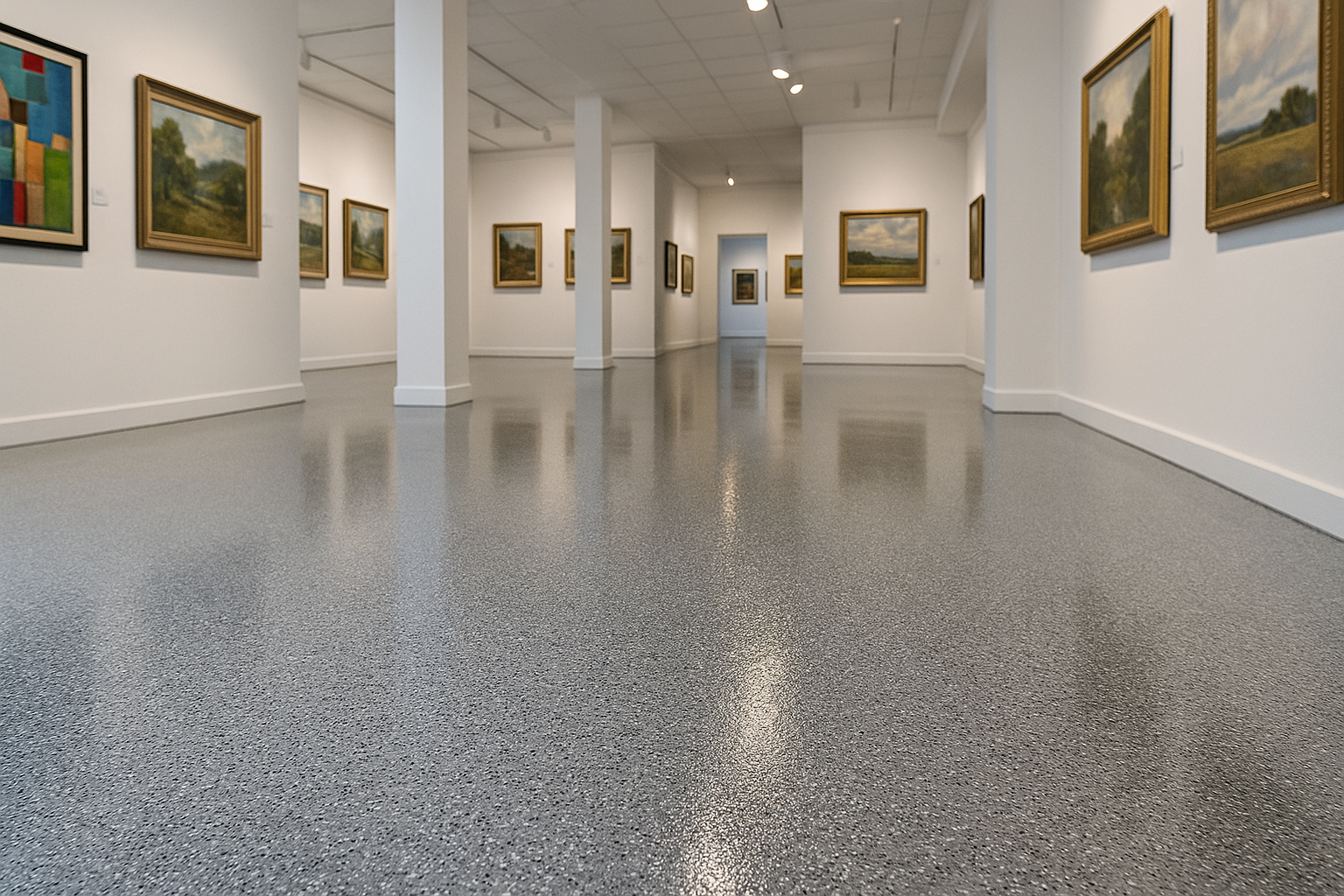
Floors do a surprising amount of talking in a gallery. They carry the foot traffic, set the tone, and either fade quietly into the background or steal the show at the right moment. If you’re shaping a space in Salt Lake City—whether it’s a small art studio in Sugar House, a retail Showroom Downtown, or a home gallery off the Wasatch foothills—epoxy flooring blends durability with design in a way that feels custom, clean, and confident. You know what? When the floor works this hard, your artwork or products look better, your staff moves easier, and your visitors remember the experience for the right reasons.
Contents
- 1 Why epoxy and galleries get along so well
- 2 What sets a Salt Lake City epoxy job apart
- 3 Design choices that make art and product displays pop
- 4 The installation game plan, minus the headaches
- 5 Maintenance cheat sheet for busy curators and managers
- 6 Epoxy vs. other gallery floors at a glance
- 7 Local stories: how galleries here are using epoxy
- 8 Budget and timeline: what to expect
- 9 Quick FAQs, answered without fluff
- 10 A few pro tips most folks never hear
- 11 Ready to see your gallery floor pull its weight?
Why epoxy and galleries get along so well
Let me explain the short version first. Epoxy flooring Salt Lake City spaces need toughness, a clean look, and surfaces that don’t fuss about scuffs or spills. Epoxy does that. It’s seamless, resilient, easy to clean, and customizable enough to match a brand palette or a curator’s mood board. And because galleries can be fickle—pop-up one month, full-scale install the next—epoxy keeps things flexible without losing polish.
Durability without drama
We’re talking Solid, industrial-grade performance. Commercial epoxy flooring resists stains from coffee cups at receptions, tire marks from dollies and pedestals, and heel traffic during First Friday strolls. It shrugs off everyday wear that tile grout and soft concrete show in a hurry. Honestly, it’s tougher than it looks—especially when paired with a urethane or polyaspartic topcoat.
Looks that let the art breathe
Galleries thrive on light and clarity. Epoxy’s high light reflectance makes spaces feel bright and photogenic—great for product launches and gallery openings. Prefer something understated? We can dial it to satin or matte so glossy canvases aren’t competing with a mirror-like floor. And color? From ultra-minimal whites and soft grays to warm neutrals and rich black, art gallery flooring can be tuned to your exact vibe.
Safety and simple cleaning
Seamless floors mean no grout, fewer trip points, and a clean edge-to-edge look that’s easy to mop. Add a clear, slip-resistant epoxy texture for rainy-day entries and you’ll keep guests confident. Hygiene is baked in: spills don’t soak, stains don’t linger, and maintenance stays predictable.
What sets a Salt Lake City epoxy job apart
Galleries along the Wasatch Front face a unique blend of mountain sun, winter slush, and dry air. We tailor systems with Utah in mind so your floors hold up season after season.
- UV and altitude. Our elevation means brighter UV. We protect color and clarity with a UV-stable topcoat (aliphatic urethane or polyaspartic) that resists yellowing.
- Road salt and winter slush. Entry zones get a stronger wear coat and a fine texture. Salt crystals don’t stand a chance, and traction stays steady.
- Moisture from the slab. Spring melt and new construction can push vapor through concrete. We test with ASTM F2170 in-slab probes and install moisture mitigation primers when readings run high.
- Dust and day-to-day abuse. A tight, non-porous surface keeps dust at bay and makes end-of-day cleaning a two-song playlist instead of a two-hour chore.
In short, Utah Epoxy Coatings need the right chemistry and the right prep. We deliver both, so your gallery floor doesn’t turn finicky after the first winter.
Design choices that make art and product displays pop
Here’s the thing: a gallery floor should support the story of the space. Epoxy is a chameleon in the best way—quiet when it should be, bold when it’s asked to be.
- Solid color sophistication. Clean, single-tone floors in warm gray, bone, charcoal, or jet black. They frame artwork like a good mat frames a print.
- Metallic epoxy drama. Subtle, flowing metals that feel like poured silk—great for showrooms and statement foyers. Beautiful without being loud.
- Quartz or micro-Flake texture. A tiny, even sparkle that adds traction and hides dust—a favorite for entry corridors and retail sales floors.
- Custom striping and stencils. Wayfinding lines, logo inlays, exhibit markers. We can lay these beneath a clear coat so they last.
A quick note on light: high-gloss floors bump the room’s light reflectance by 20 to 30 percent, which can reduce lighting load and help products photograph better. If glare’s a concern for framed work, we switch to satin. Same durability, less bounce.
The installation game plan, minus the headaches
Every space is different, but a clean, proven Process keeps surprises to a minimum. We plan around openings, workshops, and deliveries—nobody wants a floor crew stepping over a sculpture delivery.
- Walkthrough and testing. We measure, check substrate hardness, and perform ASTM F2170 moisture tests on concrete that looks suspect or is newly poured.
- Surface prep that matters. Mechanical diamond grinding or shot-blasting opens the concrete. We patch cracks, pre-fill joints where needed, and vacuum to white-glove clean.
- Primer and body coat. 100 percent solids epoxy builds a strong base at 10–20 mils. For texture or broadcast designs, we add flake or quartz here.
- Topcoat for the finish. Urethane or polyaspartic gives UV stability and fine texture. Gloss, satin, or matte—all on the menu.
- Return to service. Light foot traffic in 12–24 hours; displays and rolling loads usually by day two or three, depending on the system and temperature.
We’re practical about scheduling—overnights or weekends are available, especially during show changes or between retail resets.
Maintenance cheat sheet for busy curators and managers
Epoxy is tough, but it still appreciates a little care. A mop and a mat go a long way.
- Daily or as needed. Dust mop or soft-bristle sweep. Place walk-off mats by entrances to catch grit and salt.
- Weekly clean. Damp mop with a pH-neutral cleaner. Skip harsh citrus, vinegar, or abrasive pads—they’re overkill.
- Stains and scuffs. Lift tape gently; use isopropyl alcohol on stubborn scuffs. Avoid strong solvents unless we’ve blessed them.
- Furniture and pedestals. Felt pads under bases; casters rated for hard surfaces. Little touches protect the finish.
- Refresh options. In heavy-use areas, a fresh urethane topcoat every few years keeps the floor looking new without a full redo.
Spoiler: most galleries find they spend less time on floors once epoxy goes in. Less scrubbing, more showcasing.
Epoxy vs. other gallery floors at a glance
No surface does everything, but some do more of what a gallery needs. Here’s a simple comparison to help you weigh options.
| Feature | Epoxy Floor | Polished Concrete / Tile |
|---|---|---|
| Seamless surface | Yes—easy cleaning, no grout lines | Limited—grout lines or pores remain |
| Design flexibility | High—Colors, metallics, textures, logos | Medium—depends on finish and grout |
| Chemical/salt resistance | Excellent with urethane topcoat | Varies—can stain or etch |
| Slip resistance | Adjustable texture by area | Fixed by tile choice or polish level |
| Maintenance | Low—dust mop and neutral cleaner | Medium—grout cleaning or periodic re-polish |
Local stories: how galleries here are using epoxy
We’re not naming names, but you’ll probably recognize the types of spaces:
- Sugar House ceramics studio. The owner wanted a floor that didn’t swallow light but could handle clay drips and kiln carts. We installed a satin gray with a micro-quartz texture. It brightened the space, and cleanup time dropped by half.
- Downtown pop-up on Main. A three-month retail gallery needed fast turnaround. We ground, primed, laid a metallic silver, and finished with a UV-stable topcoat—all over a weekend. Monday’s launch looked like a magazine spread.
- Holladay home gallery/Garage conversion. The homeowner wanted a space that could host a small show and still park a classic Car. We used a full-flake epoxy system with urethane finish. It looks gallery-clean but laughs at hot tires and snowmelt.
These aren’t one-offs. Across the valley—from the Granary District’s studios to Foothill’s boutiques—gallery epoxy floors are helping spaces work smarter and look sharper.
Budget and timeline: what to expect
No two floors start from the same place. A smooth, newer slab is a different animal than an older, cracked one with high moisture. That said, it helps to have honest ballparks.
- Typical cost ranges. Most commercial epoxy flooring for galleries lands in a mid-range per square foot, while heavy decorative systems (metallics, logos) or heavy repairs can run higher. After a quick site visit, we’ll give you a fixed quote—no surprises.
- Schedule. Many installs wrap in 2–4 days, with light traffic on day two. Larger or multi-phase projects may run a week, especially if we’re doing moisture mitigation or complex artwork inlays.
- Working around events. We routinely shift to evenings or weekends so you don’t lose a showing, a launch, or inventory time.
One small contradiction that’s worth noting: epoxy is fast, but it rewards patience. Giving it a full cure window ensures the longest life, so we’ll stage re-entry by area—front-of-house first, back-of-house next, then heavy rolling loads.
Quick FAQs, answered without fluff
- Is epoxy slippery? Not when finished right. We tune slip resistance by area—smoother in quiet galleries, textured at entries and near beverages.
- Will it yellow in the sun? We use UV-stable topcoats to protect color and clarity. For south-facing glass, we recommend satin or matte to reduce glare.
- What about odor? Our 100 percent solids epoxies are low-odor compared to solvent-heavy products. We also ventilate and schedule when traffic is light.
- Can it handle hot tires and dollies? Yes—especially with urethane or polyaspartic Finishes. That combo resists hot tire pickup and rolling loads.
- How do repairs work? Most scuffs buff out. Gouges can be patched, then a fresh topcoat blends everything back together.
If you’ve got niche needs—ESD control for media rooms, specific COF targets, or LEED considerations—say the word. We’ve got systems that fit the spec without killing the look.
A few pro tips most folks never hear
- Control the edges. A small cove base ties wall to floor neatly, prevents mop lines, and looks museum-grade.
- Plan for pedestals. Felt or UHMW pads under heavy plinths make movement easy and protect the finish.
- Think photography. If your space is photo-heavy, satin floors reduce glare lines and color cast on product shots.
- Mind the mats. Choose rubber-safe mats that won’t leach plasticizers. We’ll point you to good ones.
Small decisions save big headaches later. We help with those details because the details show up in every opening, every show, and every photo you post.
Ready to see your gallery floor pull its weight?
Your floor shouldn’t be the squeaky wheel—it should be the steady platform that makes everything else shine. Whether you’re refreshing a retail showroom near City Creek, building a studio in the Granary, or turning a garage into a private gallery in Millcreek, Utah Epoxy Coatings is here to help. We design, prep, and install art gallery flooring that stands up to Salt Lake life and looks sharp doing it.
Call us at 801-515-0892 or tap Request a Free Quote. Tell us about your space, your timeline, and your vision—and we’ll bring the right system, the right finish, and the right crew to make it real.