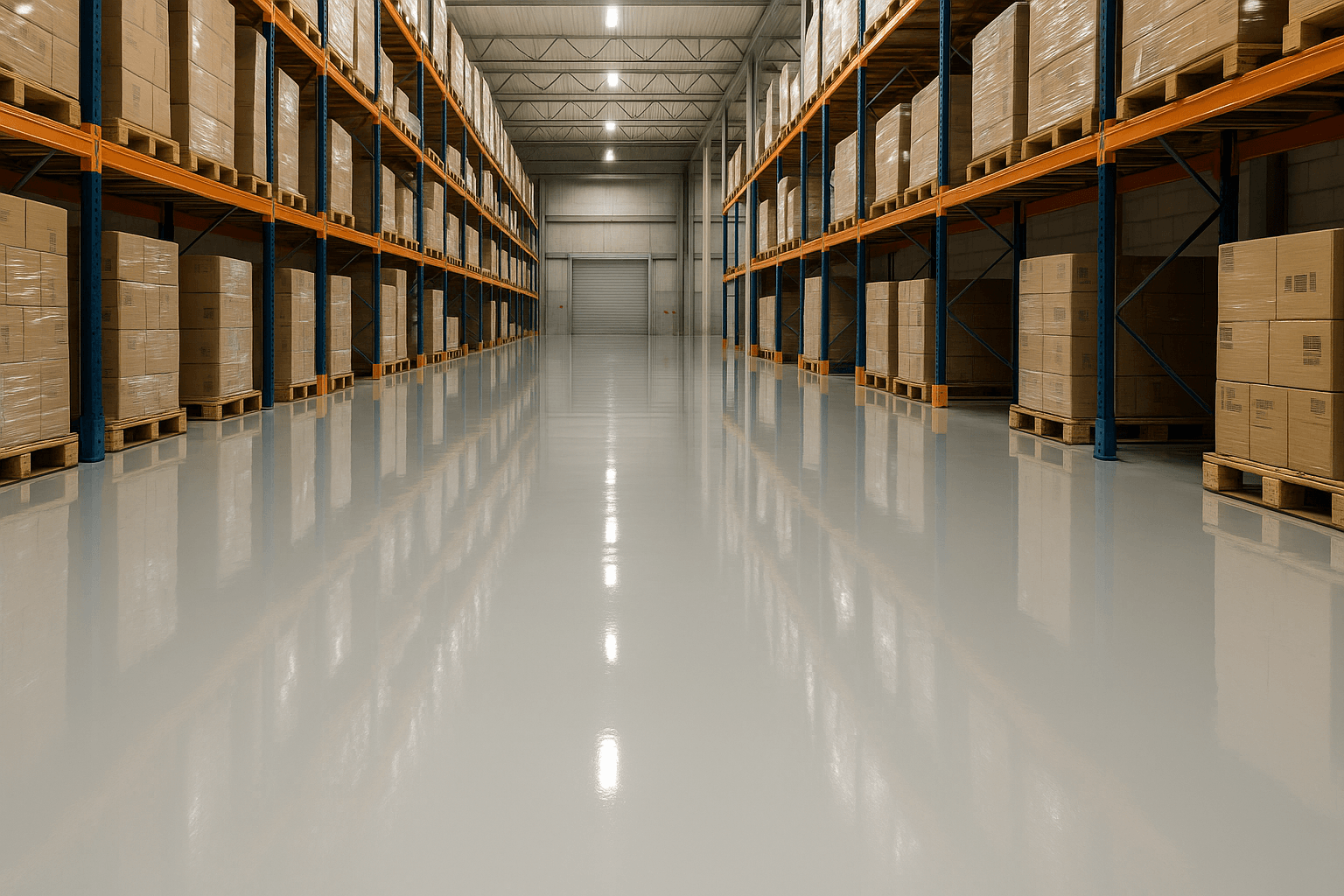
Your Warehouse floor does a lot more than hold up racks and forklift traffic. It carries your schedule, your safety record, and frankly, your stress level. If you’re in the Salt Lake City area, you also battle freeze–thaw cycles, road salt, and concrete dust that seems to find its way into every aisle. That’s why so many operations managers are turning to Epoxy Floor coating systems—because they’re tough, clean, and easy to live with. You know what? When the floor stops fighting you, everything else runs smoother.
Contents
- 1 Why Warehouse Floors Take a Beating in Salt Lake City
- 2 What Is Epoxy Floor Coating—In Plain English
- 3 Core Benefits That Matter on the Warehouse Floor
- 4 Slip Resistance Without the Sandpaper Feel
- 5 Temperature, Moisture, and the Utah Question
- 6 Epoxy vs Polyaspartic vs Urethane Cement: Which Fits Your Warehouse?
- 7 How the Installation Works (And Why Prep Is Everything)
- 8 Real-world Use Cases Along the Wasatch
- 9 Common Questions, Straight Answers
- 10 Maintenance Tips You’ll Actually Use
- 11 When Epoxy Isn’t the Answer
- 12 Ready To Make Your Warehouse Work Harder?
Why Warehouse Floors Take a Beating in Salt Lake City
From West Valley to Draper, our climate keeps concrete on edge. Winter brings snow, slush, and de-icing salts. Spring brings thaw and moisture. Summer heat pushes slabs to expand and contract. Meanwhile, forklifts, pallet jacks, and loaded carts grind fine abrasives into the surface. Spill a little hydraulic fluid? It soaks in and leaves a permanent, slick stain. Over time, plain concrete powders and pits. That dust gets airborne and lands on inventory and equipment—annoying and avoidable.
An industrial epoxy system seals and shields the slab. It stops salt intrusion and keeps oils, brake fluid, and cleaning agents from soaking in. The result: a surface that stays Solid and looks professional, even with daily abuse.
What Is Epoxy Floor Coating—In Plain English
Think of epoxy flooring as a hardened resin shell that bonds to concrete. It’s not paint. It’s a two-part system (resin and hardener) that cures into a dense, chemical-resistant layer. Most warehouse builds use 100 percent solids epoxy, which means no water or solvent to evaporate—just pure build and strength.
A typical warehouse system includes a primer for grab, a build coat for thickness, and a high-wear topcoat. Many teams add a urethane topcoat because it resists UV, abrasions, and tire marks even better. It’s a layered approach—each coat has a job, and together they make a floor that works as hard as your team.
Core Benefits That Matter on the Warehouse Floor
Durability that handles real loads
Forklifts, pallet jacks, rolling ladders—bring it on. Properly installed warehouse epoxy floors handle point loads and constant turning. The coating bridges micro-cracking and reduces raveling at the surface, which helps protect your concrete investment. Is epoxy “hard”? Yes. But with the right thickness and a flexible primer, it’s not brittle. It moves enough with the slab to stay bonded.
Chemical and stain resistance
Hydraulic oil, DEF, mild acids, detergents—epoxy shrugs off most warehouse chemistry. Spills are easier to see and remove. You won’t chase ghost stains later. And if you store food or pharmaceuticals, the sealed surface helps with cleanliness audits and pest control. Clean floors make clean operations. Simple as that.
Safer, cleaner traffic lanes
Dusty concrete is slippery. Wet concrete is worse. A textured epoxy floor coating with anti-slip aggregate gives grip where you need it, like dock doors and walkways, without feeling like sandpaper across the entire building. Clear lane striping, hazard zones, and pedestrian pathways reduce confusion—one of the easiest ways to improve OSHA compliance and keep people safe.
Faster cleaning and lower upkeep
Sealed floors clean up in fewer passes. Scrubbers glide. Mops actually lift dirt instead of pushing sludge into pores. Over a year, many facilities see less downtime for cleaning and fewer replacement wheels on material handling equipment. It’s a little thing that becomes a big thing.
Real-world ROI
Here’s the thing: a floor is overhead until it starts saving you money. With epoxy, savings show up in cleaning labor, reduced dusting on inventory, longer concrete life, and fewer slip incidents. Many warehouses in the Wasatch Front see payback in 12–24 months, depending on traffic and square footage. It’s not flashy, but it’s smart business.
Looks and branding—yes, that matters too
Clean, bright floors improve lighting and morale. Color-coded zones speed training and reduce mistakes. We’ve seen night shift teams perk up after a fresh install because visibility improves and the place simply feels cared for. That matters more than most spreadsheets say.
Slip Resistance Without the Sandpaper Feel
Salt Lake City winters mean wet boots and damp dock plates. We tune texture for the task. Additives like aluminum oxide or polymer beads can be blended into the coats to create traction. Dock areas and washdown zones get more grit; main aisles get less. That way, pallets slide on and off racking without snagging, but walkways stay safe when wet.
A common worry is, “Will it be too rough to clean?” Not if the aggregate is selected and broadcast correctly. We match texture to your scrubber pads and cleaning routine. The goal is simple: safe underfoot, easy under the machine.
Temperature, Moisture, and the Utah Question
Concrete breathes, and our high desert climate adds a twist. Moisture vapor can move through slabs, especially in older buildings without a proper vapor barrier. Before we say “yes,” we test. Tools like Tramex meters and ASTM F2170 in-slab probes tell us if a moisture-mitigating epoxy primer is needed. If we see high readings, we address it up front—because bubbles and blisters aren’t invited.
Winter installs? Totally doable. We stage heaters, monitor slab temps, and adjust cure schedules so your timeline stays intact. Summer brings faster cures, which we also plan around. Either way, the chemistry needs the right conditions, and we make sure it gets them.
Epoxy vs Polyaspartic vs Urethane Cement: Which Fits Your Warehouse?
There isn’t one magic bucket. Different systems shine in different conditions. Quick snapshot below.
| System | Best For | Key Advantages |
|---|---|---|
| 100% Solids Epoxy | General warehouses, distribution, light manufacturing | High build, great chemical resistance, cost-effective, customizable texture |
| Polyaspartic Topcoat | Fast turnarounds, UV exposure near dock doors | Fast cure even in cool temps, color/UV stability, strong abrasion resistance |
| Urethane Cement | Thermal shock, constant wet areas, food processing | Handles hot washdowns, heavy impact, moisture-tolerant during install |
Many warehouse floors in Salt Lake City land on a hybrid: epoxy build coats for strength, plus a high-wear urethane or polyaspartic topcoat for long-term scuff resistance and color hold.
How the Installation Works (And Why Prep Is Everything)
A great coating starts before the first gallon is opened. Surface prep is the whole story. We mechanically open the concrete (diamond grind or shot blast) with dust-controlled equipment from brands like Blastrac and Husqvarna, so the primer can bite in. Joints and cracks get routed and filled. Oil contamination? We treat it, then test the bond. It’s methodical because shortcuts show up later—and not in a good way.
Typical sequence:
- Survey and testing. Check slab condition, moisture, hardness, and flatness.
- Prep. Shot blast or grind; HEPA vacuum; detail edges.
- Prime. Penetrating primer for maximum adhesion; moisture primer if needed.
- Build coats. 1–2 coats of industrial epoxy for thickness and durability.
- Texture and color. Broadcast aggregate as required; add lane Colors or markings.
- Topcoat. Urethane or polyaspartic for abrasion and stain resistance.
Scheduling is flexible. We often stage installs by quadrant so you can keep shipping. Weekend work is common. Forklift traffic can sometimes resume as soon as 24–48 hours after final coat, depending on the system and temperature.
Real-world Use Cases Along the Wasatch
West Valley City distribution center: 60,000 square feet. Concrete was dusting, with tire marks layering by the week. We installed a two-coat epoxy with a satin urethane topcoat and light broadcast texture in aisles. Result: brighter space, less dust on cartons, and faster scrub times. The facility manager reported fewer slip complaints near the docks during winter.
Draper cold storage staging area: Skid traffic and frequent wet conditions. We used a urethane cement base in wet zones, tied into epoxy in the dry receiving lanes. Heavy, yes—but now it stands up to thermal cycling and pallet impacts. The mild contradiction here? A thicker system costs more up front, yet it prevented chipping that would have meant repairs every season.
Sugar House e-commerce warehouse: 12,000 square feet. Tight space, long hours. The team needed quick turnaround. We prepped on Friday, installed epoxy and a fast-cure polyaspartic topcoat over the weekend, and had them back in action Monday afternoon. Sometimes speed matters as much as thickness.
Common Questions, Straight Answers
How thick should it be? Most warehouse floors run 20–60 mils total, depending on traffic and texture. Heavier impact or uneven slabs may call for a slurry-build system.
How fast can we get back to work? Light foot traffic in 8–12 hours; forklifts in 24–72 hours depending on temperature and the topcoat chemistry.
Is epoxy slippery? Smooth epoxy can be slick when wet. That’s why we tune anti-slip with the right grit where it counts.
What about cost? Every floor is different, but many warehouse systems land between 3 and 7 dollars per square foot in our region, more for heavy texture or moisture mitigation. A site visit gives the real number.
Color and striping? Absolutely. We can color main aisles, mark pedestrian walkways, and stripe staging zones with high-contrast coatings that last longer than tape.
Warranty? We stand behind materials and workmanship. The specifics depend on the system and use case. We’ll spell it out in writing.
Maintenance Tips You’ll Actually Use
Good news: keeping epoxy flooring happy is pretty simple. A few habits go a long way.
- Scrub smart. Use a neutral-pH cleaner and soft or medium pads. Tennant and Clarke machines work well on coated surfaces.
- Catch the salt. In winter, stage entry mats and clean dock approaches often. Salt crystals act like sandpaper.
- Protect pivot points. Place wear plates or thicker texture where forklifts spin.
- Mind the wheels. Softer, non-marking tires reduce scuffing and chatter.
- Fix small chips early. Quick repairs keep moisture and dirt out of the system.
Honestly, most teams tell us they spend less time cleaning after the upgrade—and their scrubber operators don’t miss the cement dust one bit.
When Epoxy Isn’t the Answer
We love epoxy. But it’s not a cure-all. Constant boiling-water washdowns? Go urethane cement. Aggressive thermal shock or commercial kitchens? Same call. If your slab is emitting high moisture and you can’t address it, we’ll recommend a moisture-tolerant system or a mitigation primer first. Steel-wheeled carts can also gouge resin surfaces; in those zones, we may thicken the build or change the system. The point is, the right answer fits the work, not the other way around.
Ready To Make Your Warehouse Work Harder?
Clean, safe, and durable floors change the way a warehouse feels—and functions. If you’re anywhere along the Wasatch Front, Utah Epoxy Coatings can help you plan a system that matches your traffic, your timeline, and your budget. Let’s walk the space, test the slab, and give you straight answers. No guesswork. Just a floor that supports your goals.
Call 801-515-0892 or hit the button below to Request a Free Quote. We’ll schedule a quick site visit in Salt Lake City or the surrounding area and get you real numbers you can use.